



A hospital bed is designed to support treatment, observation and recovery. But the human body is not designed to remain still for long periods.
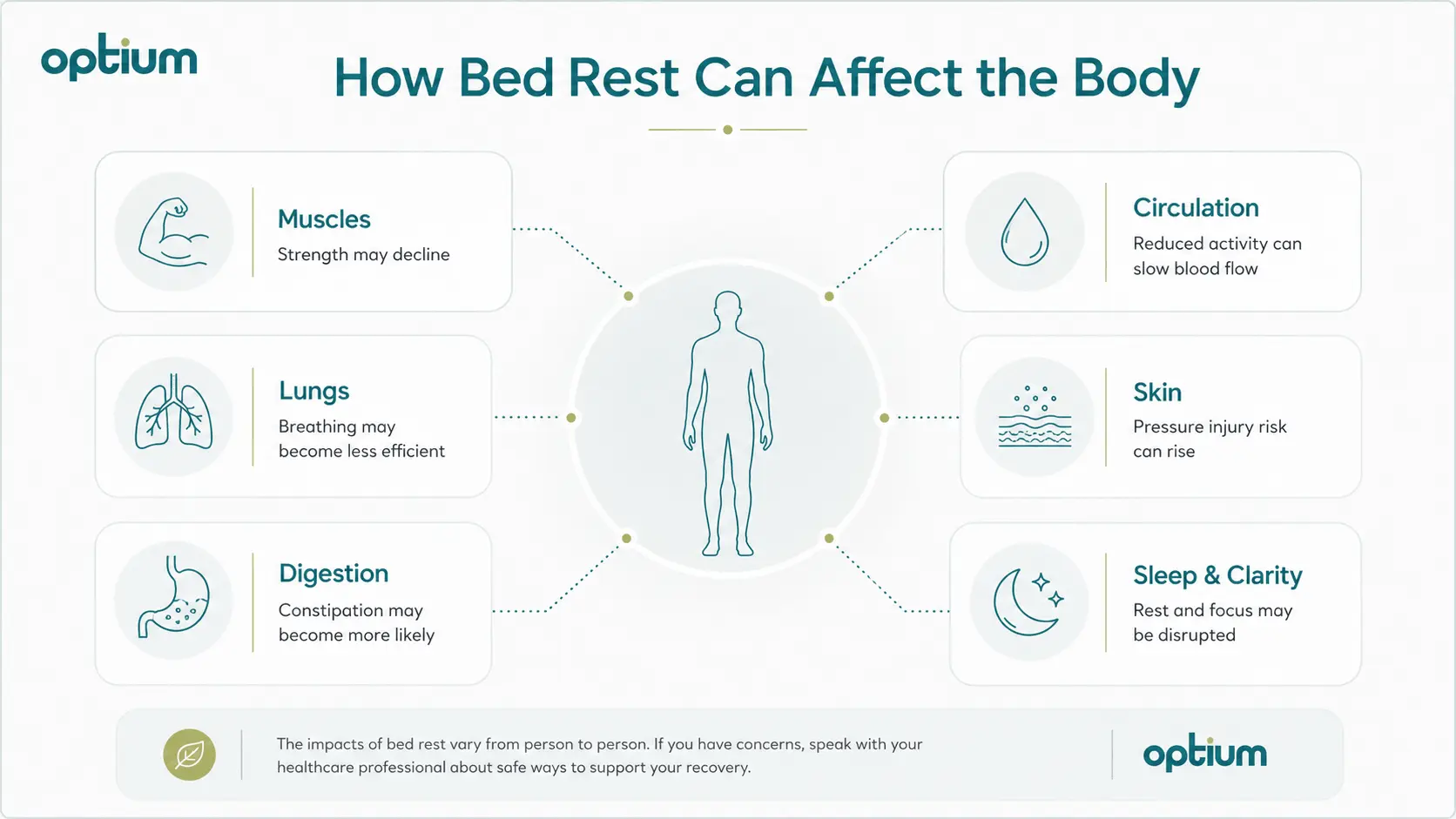
When normal movement decreases, the effects can extend far beyond temporary stiffness. Muscles receive less resistance. The cardiovascular system spends less time adapting to gravity. Pressure remains concentrated on vulnerable areas of skin. Breathing patterns, digestion, sleep and mental clarity may also change.
Some of these effects can begin much sooner than most people expect.
Seven days is not a medical deadline, and every patient responds differently. A young adult who can sit, stand and walk with assistance will not have the same experience as an older patient recovering from surgery or a critically ill patient receiving intensive care.
Even so, research shows that one week of substantial inactivity can be long enough for measurable physical deconditioning to begin.
Quick Answer: What Can Seven Days of Bed Rest Do to the Body?
After seven days of substantial bed rest, measurable deconditioning may already be underway. Muscle mass and strength can decline, standing may feel harder, circulation and breathing may be affected, pressure injury risk can rise, and sleep, digestion, confidence and independence may deteriorate—especially in older or critically ill patients.
Is Seven Days a Magic Number?
No. The body does not wait until the seventh day to begin adapting to inactivity.
Changes start as soon as normal movement, weight bearing and upright activity decrease. The speed and severity of those changes depend on the patient’s age, illness, nutrition, medication, mobility before admission and the reason bed rest was prescribed.
A controlled study involving healthy young men found that one week of bed rest was enough to reduce skeletal muscle mass, lower strength and decrease whole-body insulin sensitivity. The study reported an approximately 3.2% reduction in quadriceps cross-sectional area, illustrating how quickly measurable muscle changes can occur even in previously healthy people. The results should not be treated as a forecast for every hospital patient, but they demonstrate that one week is physiologically meaningful. The full study is available through the U.S. National Library of Medicine.
A separate study involving healthy older adults found that ten days of bed rest produced substantial losses in lower-extremity strength, power and aerobic capacity. These effects may be more consequential for people who already have limited physical reserves. The research can be reviewed through PubMed.
What may happen during the first week?
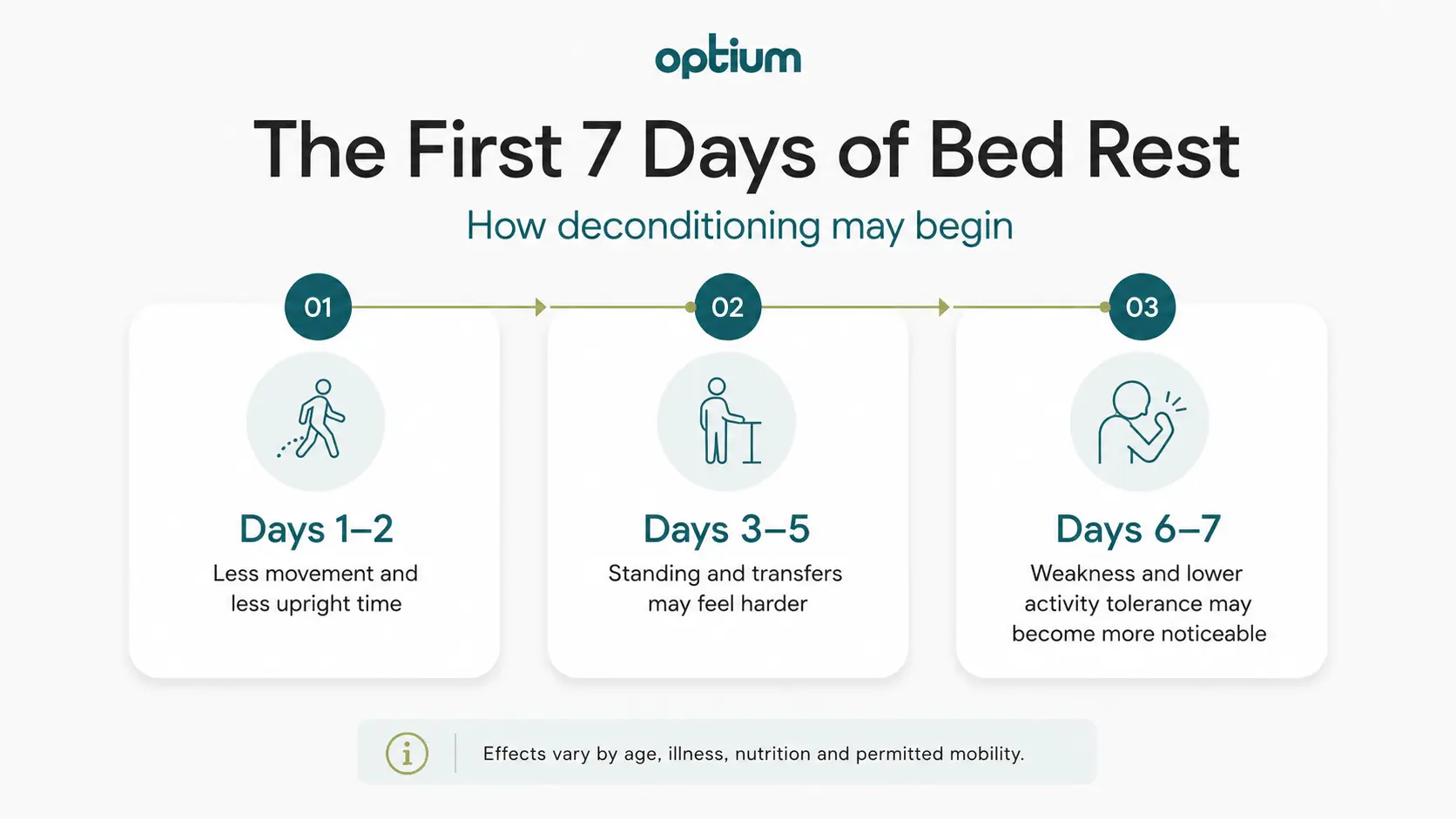
During the first one or two days, the patient spends less time standing, walking and changing position. Stiffness, reduced confidence and difficulty returning upright may begin to appear, particularly after surgery or acute illness.
Between days three and five, lower activity becomes more noticeable during transfers. Sitting at the edge of the bed, standing or walking to the bathroom may require more effort than expected.
By days six and seven, measurable deconditioning may be developing. Muscle weakness, reduced tolerance for activity and greater dependence on assistance can become more apparent.
This is not a universal timeline. A medically stable patient participating in an approved mobility programme may experience much less decline than someone under strict bed-rest orders.
1. Why Do Muscles Weaken So Quickly During Bed Rest?
Muscle is maintained through use.
Standing, walking, rising from a chair and stabilising the body against gravity create signals that help preserve muscle tissue. When those signals decrease, the body begins adapting to the lower workload.
Weight-bearing muscles in the legs are particularly vulnerable because they normally work throughout the day. During prolonged bed rest, muscle protein synthesis may decrease while the body continues breaking down existing tissue.
The patient may not notice this process while lying down. Weakness often becomes obvious during an ordinary task: sitting without support, standing beside the bed, reaching the bathroom or climbing a step after discharge.
For a previously active adult, the change may feel like unusual fatigue. For an older or frail patient, the same decline may determine whether they can walk independently or need ongoing assistance.
Short periods of disuse can also affect strength before major visible muscle loss occurs. A five-day immobilisation study concluded that even short periods of muscle disuse can produce substantial reductions in skeletal muscle mass and strength.
2. Why Can Standing Feel Difficult After Several Days in Bed?
Lying horizontally changes the cardiovascular workload.
When a person stands, the body must rapidly adjust blood pressure and circulation against gravity. After prolonged inactivity, this response may become less efficient. The patient may experience dizziness, blurred vision, weakness, instability or a feeling that they may faint.
This is known as orthostatic intolerance. It does not affect every patient, and bed rest is only one possible contributor. Dehydration, medication, infection, blood loss and underlying medical conditions may also cause symptoms.
A patient may feel relatively comfortable while lying down but become unstable during the first attempt to stand. This is why mobility should not be reduced to a simple instruction to “get up and walk.”
Transfers should be planned according to the patient’s strength, blood pressure, clinical restrictions and individual fall risk.
Adjusting the hospital bed to an appropriate transfer height may help position the patient’s feet and body more effectively. It cannot eliminate dizziness, weakness or the risk of falling.
3. How Does Bed Rest Affect the Heart and Circulation?
Normal daily movement helps the cardiovascular system remain accustomed to changes in posture and activity.
The contraction of the leg muscles also supports venous return by helping move blood toward the heart. When movement decreases, this muscle-pump activity becomes less frequent.
As deconditioning develops, the patient may experience a higher heart-rate response during relatively modest activity. Sitting up, transferring to a chair or walking a short distance may feel more demanding than it would have before hospitalisation.
These effects are not always visible while the patient is resting. A person can appear stable in bed but become tired quickly during rehabilitation.
This helps explain why recovery does not necessarily happen the moment bed rest ends. The body may need gradual and clinically supervised exposure to upright activity.
4. Does Prolonged Immobility Raise Blood-Clot Risk?
Limited mobility is a recognised risk factor for venous thromboembolism, which includes deep vein thrombosis and pulmonary embolism.
When the legs remain still for extended periods, blood flow may slow. Hospital patients may also have additional risks related to surgery, trauma, cancer, age, previous clotting history, acute illness or medication.
The Centers for Disease Control and Prevention describes hospitalisation, surgery and prolonged immobility as important risk contexts for healthcare-associated blood clots.
This does not mean that seven days in bed will automatically cause a clot. Risk must be assessed individually.
Prevention may involve medically approved movement, compression devices, stockings or anticoagulant medication. The appropriate approach depends on the patient’s clotting risk, bleeding risk and wider treatment plan.
Patients and families should never independently change bed-rest restrictions or begin unapproved exercises because of something they have read online.
5. What Can Bed Rest Do to the Lungs?
Breathing continues while a patient lies in bed, but position, pain, sedation and inactivity can influence how effectively different parts of the lungs expand.
Postoperative patients may take shallower breaths because deep breathing causes discomfort. Weak or sedated patients may also cough less effectively, allowing mucus to accumulate.
One possible complication is atelectasis, in which a section of the lung does not fully expand. The National Library of Medicine’s clinical overview identifies prolonged bed rest and postoperative conditions among the situations associated with atelectasis.
This does not mean every patient who remains in bed will develop a respiratory complication. It means breathing, positioning and mobility need to be considered together.
Depending on the patient’s condition, the clinical team may use upright positioning, respiratory exercises, coughing support or progressive movement. Patients recovering from surgery may have additional positioning and transfer requirements, which are discussed in Optium’s guide to electric hospital beds for post-operative recovery.
The correct intervention depends on the patient’s diagnosis, oxygen needs, surgery and medical restrictions.
6. Why Does Pressure Injury Risk Increase?
Pressure injuries can develop when skin and underlying tissue remain exposed to sustained pressure, particularly over bony areas such as the heels, hips, elbows and sacrum.
Time in bed is only one part of the risk.
Moisture, friction, shear, circulation, nutrition, sensation, body weight, mattress selection and the patient’s ability to change position all influence whether tissue damage develops.
A patient who can reposition independently may relieve pressure without consciously planning it. A sedated, paralysed or extremely weak patient may remain in the same position unless assisted.
The Agency for Healthcare Research and Quality includes frequent repositioning and appropriate pressure-relieving equipment among the components of pressure injury prevention. The National Pressure Injury Advisory Panel also states that repositioning should continue even when a specialised support surface is being used.
A suitable hospital mattress can support pressure redistribution, but no mattress can replace skin assessment, repositioning, moisture management, nutrition and patient-specific clinical care.
Facilities evaluating mattress dimensions and bed compatibility can review options such as the Optium foam hospital mattress, but clinical teams must determine whether a particular support surface is suitable for the patient population and risk profile.
7. Why Can Digestion Slow Down in Hospital?
Movement supports normal gastrointestinal function.
During hospitalisation, reduced mobility may combine with dehydration, dietary changes, stress, pain and medications such as opioids. Together, these factors can increase the likelihood of constipation.
The result can affect more than physical comfort. Constipation may interfere with appetite, sleep, willingness to move and the overall patient experience.
A review of constipation in hospitalised patients identifies mobility, hydration, medication management and toileting access as relevant elements of prevention and treatment. The review is available through the National Library of Medicine.
The physical environment may also influence how willing a patient is to move. A person who cannot reach the bathroom safely, sit upright for meals or communicate toileting needs may become more dependent on staff.
This is one reason the bed, overbed table, bedside cabinet, walking route and bathroom access should be considered as parts of the same patient environment rather than isolated objects.
8. Can Bed Rest Affect Sleep and Mental Clarity?
Hospital sleep is rarely the same as sleep at home.
Noise, alarms, observations, pain, medication and unfamiliar surroundings can repeatedly interrupt the sleep cycle. When a patient remains in the same bed and position throughout the day, the distinction between daytime activity and nighttime rest may also become weaker.
Poor sleep and delirium commonly coexist in older and critically ill patients, although delirium is complex and may also be associated with infection, medication, metabolic disturbance, surgery and underlying illness.
A clinical review published through the National Library of Medicine describes the relationship between sleep disruption and delirium in older adults.
Daytime movement, exposure to normal light patterns, orientation, pain control and reduced unnecessary nighttime disruption may form part of a wider prevention strategy.
Small environmental details can also matter. Access to glasses, hearing aids, water, a phone and personal belongings may support orientation and independence. Optium’s guide to how patient room furniture shapes recovery and comfort explains how these repeated bedside interactions influence the wider patient experience.
Furniture cannot prevent delirium. It can help create a room that is easier to understand, navigate and use.
9. Why Can the Effects Continue After Discharge?
A patient can be medically ready to leave the hospital without having fully recovered the physical ability needed for everyday life.
Walking across a hospital room is different from climbing stairs, bathing, preparing food, getting into a car or moving safely through an unfamiliar home.
Weakness that seems manageable under supervision may become much more significant after discharge.
Hospital-associated deconditioning describes a decline in physical or functional ability that develops during or after hospitalisation. It may be influenced by immobility, illness, cognition, mood, nutrition and the patient’s condition before admission. A detailed review is available through PMC.
For some patients, the hidden consequence of bed rest is not a dramatic medical complication. It is a quieter loss of confidence and independence.
This is why discharge planning should consider more than whether the original illness has stabilised. Teams may need to assess transfer ability, walking tolerance, rehabilitation needs, equipment requirements and the level of support available at home.
Who Is Most Vulnerable to the Effects of Bed Rest?
Anyone can experience deconditioning, but the effects are not distributed evenly.
Older adults often begin with lower muscle reserves and may have less capacity to absorb the physical stress of hospitalisation. Frailty, malnutrition, neurological conditions, respiratory disease and existing mobility limitations can increase vulnerability.
Critical illness adds further complexity. Inflammation, sedation, mechanical ventilation, organ dysfunction and severe metabolic stress may accelerate weakness beyond the effect of inactivity alone.
Postoperative patients may also face pain, drains, lines, wound restrictions and fear of movement.
Two patients can spend the same number of days in bed and leave the hospital with completely different levels of function. Duration matters, but it is never the only variable.
Can a Better Hospital Bed Prevent These Problems?
No hospital bed can prevent every complication of immobility.
A bed cannot preserve muscle by itself, eliminate blood-clot risk, guarantee healthy skin or replace a clinical mobility programme. Claims suggesting that a single product can independently prevent complex medical complications should be treated with caution.
A well-selected bed can make appropriate care easier to deliver.
Height adjustment may support transfer preparation and allow caregivers to work at a more appropriate level. Backrest adjustment may help some patients eat, communicate or breathe more comfortably. Easier access around the bed may support repositioning, skin inspection and routine care.
Depending on the model, an electronic patient care bed may offer powered backrest, height and leg-rest adjustment, along with features designed for cleaning, positioning and daily ward workflows.
These functions support the environment in which care is delivered. They are not a substitute for clinical judgement.
The bed is not the treatment. It is one component of the system surrounding treatment, nursing, rehabilitation and recovery.
What Actually Helps Reduce the Harm of Prolonged Bed Rest?
The most effective response is usually multidisciplinary and patient-specific.
When medically appropriate, progressive mobility may begin with actions much smaller than walking through a corridor. The first step may be changing position, completing an approved movement in bed, raising the upper body, sitting at the edge of the mattress, transferring to a chair or standing with assistance.
The Agency for Healthcare Research and Quality states that early mobility protocols can help minimise complications of bed rest, improve overall function and support strength and endurance.
A systematic review of early mobilisation within enhanced recovery pathways also found benefits including improved functional walking capacity and reductions in certain postoperative complications. The research can be reviewed through PubMed.
Mobility is only one part of the response. The wider plan may include pain control, nutrition, hydration, respiratory care, pressure injury prevention, clot-risk assessment, medication review and sleep protection.
Strict bed rest may sometimes be medically necessary. Movement should never be pursued against clinical restrictions.
The goal is not to make every patient walk as soon as possible. The goal is to ensure that immobility is necessary, regularly reviewed and supported by a plan to protect function.
What Should Hospital Teams and Equipment Buyers Take Away?
For patients and families, this article is primarily about understanding why mobility, positioning and rehabilitation matter.
For hospital teams and procurement departments, the lesson is more operational: equipment should make the approved care plan easier to perform, not create additional friction.
A bed should be evaluated within the department where it will be used. A general ward, surgical recovery unit and intensive care environment do not have identical requirements.
Before selecting a bed, buyers should answer five practical questions:
Which patient population and clinical department will use it?
Which positions and transfers are performed most frequently?
What level of assistance do nurses normally provide?
Which mattress, accessories and cleaning processes must be supported?
Which functions are genuinely necessary rather than simply available?
Hospitals comparing configurations can use Optium’s guide to 3-motor and 4-motor hospital beds to understand how positioning requirements change between standard and higher-acuity environments.
For a broader evaluation covering safety, hygiene, service, maintenance and workflow, review the 53 questions hospital buyers should ask before choosing an electric bed.
Recovery Begins Before the Patient Leaves the Bed
Bed rest is sometimes necessary. Immobility is not always avoidable, and movement is not appropriate for every patient at every stage of treatment.
The problem begins when remaining in bed becomes an unexamined default rather than a continuously reviewed clinical decision.
Seven days may sound short during a serious hospital admission. For the human body, it can be long enough for measurable deconditioning to begin.
Muscles weaken. Upright tolerance changes. Pressure accumulates. Ordinary movements become more demanding. Sleep, digestion and confidence may also be affected.
A safer care environment does not depend on one product or one protocol. It depends on the interaction between clinical judgement, nursing practice, mobility planning, rehabilitation, room design, mattresses and hospital beds appropriate for the department.
The objective is not simply to help the patient survive the hospital stay.
It is to protect as much strength, function and independence as medically possible along the way.
Hospitals planning a general ward, postoperative recovery unit or patient-room upgrade can contact Optium Healthcare to discuss bed configurations, mattress compatibility and department-specific workflow requirements.
Frequently Asked Questions
Can seven days of bed rest really cause muscle loss?
Yes. Controlled research has found measurable reductions in muscle mass and strength after approximately one week of substantial bed rest. The amount varies according to age, health, nutrition, illness and permitted activity.
Is bed rest always harmful?
No. Bed rest may be medically necessary after certain procedures, injuries or acute illnesses. The concern is unnecessary or prolonged immobility without regular reassessment, preventive care and an appropriate mobility plan.
Why do some patients feel dizzy when they stand?
Prolonged inactivity may reduce the body’s ability to regulate circulation when moving from lying to standing. Medication, dehydration, blood loss, infection and other medical conditions can also cause dizziness, so symptoms require clinical assessment.
Can a hospital mattress prevent pressure injuries?
A suitable support surface can form part of a pressure injury prevention plan. It cannot prevent every pressure injury by itself. Repositioning, skin assessment, moisture management, nutrition and patient-specific risk management remain necessary.
Are older patients more affected by prolonged bed rest?
Older adults may be more vulnerable because they often have lower baseline muscle reserves and a higher likelihood of frailty or pre-existing mobility limitations.
What is hospital-associated deconditioning?
Hospital-associated deconditioning is a decline in physical, functional or sometimes cognitive ability associated with hospitalisation. Immobility is an important contributor, but illness, medication, nutrition, sleep and the patient’s previous health also matter.
Does raising the head of a hospital bed prevent lung complications?
Not by itself. Upright positioning may support breathing comfort for some patients, but respiratory prevention and treatment depend on the patient’s condition and may also involve movement, coughing, breathing exercises or other clinical interventions.
How can hospitals reduce complications related to immobility?
Hospitals can use patient-specific mobility plans, safe transfers, pressure injury prevention, clot-risk assessment, respiratory care, nutrition support, sleep protection and equipment suited to the clinical environment.
Sources and Methodology
This article draws on controlled bed-rest research, peer-reviewed reviews and clinical guidance from organisations including the U.S. National Library of Medicine, the Agency for Healthcare Research and Quality, the Centers for Disease Control and Prevention and the National Pressure Injury Advisory Panel.
Controlled bed-rest studies are useful for demonstrating how the body responds to inactivity, but they are not identical to real hospital stays. Hospital patients may also be affected by surgery, infection, inflammation, pain, sedation, medication, malnutrition and pre-existing disease.
For this reason, the figures and timelines discussed here should be interpreted as evidence of how quickly deconditioning can begin—not as an exact prediction for an individual patient.
This content is intended for general education and healthcare planning. It does not provide medical advice, diagnosis or treatment. Individual mobility, positioning and treatment decisions should be made by qualified healthcare professionals.